
7 hr
Shahrisabz Day Tour from Samarkand with Optional Guide
Journey to Timur's birthplace through mountain passes and explore UNESCO-listed palaces and monuments
Reserve
Hand-picked by our editors — only the best 5 day trips from 12 reviewed.
Verified partners for every tour, free cancellation where available, and instant confirmation on every booking.
7 hr
Journey to Timur's birthplace through mountain passes and explore UNESCO-listed palaces and monuments
Reserve
7 hr 30 min
Journey through Takhtakaracha Pass to explore ancient palaces, mosques, and taste traditional cuisine
Reserve
6 hr 30 min
Discover ancient palaces, mystical rock formations, and mountain vistas on this full-day journey from Samarkand
ReservePrices from verified partners. Availability updates in real time at checkout. Free cancellation policies apply where shown.
The landmarks, rooms, and views travelers on this tour remember — all visible on a single visit.
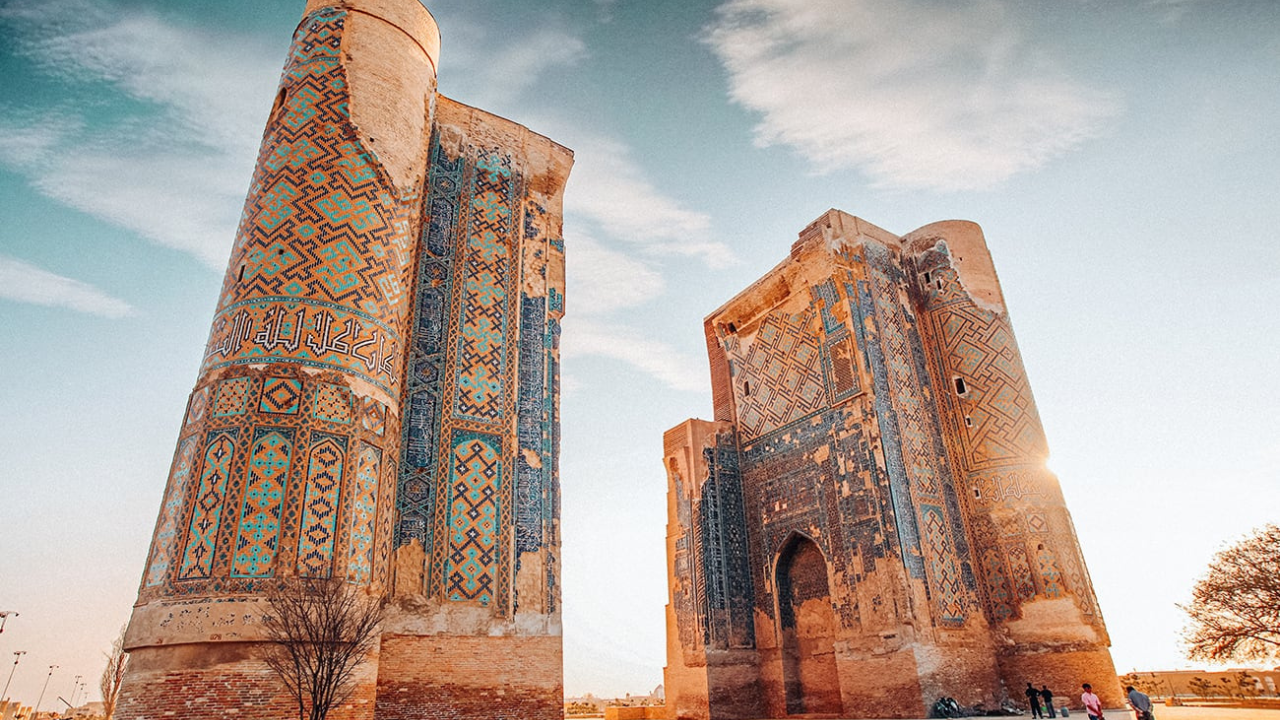
This massive portal is all that remains of Timur's summer residence, featuring intricate blue-and-gold tilework from the 14th century.
This complex contains the Blue Mosque and the mausoleums of Timur's ancestors, surrounded by peaceful gardens.
This site houses the tomb intended for Timur himself, featuring a mysterious underground crypt discovered in the 20th century.
A central feature of the Dorut Tilavat complex, this mosque displays remarkable architectural symmetry and tiling.
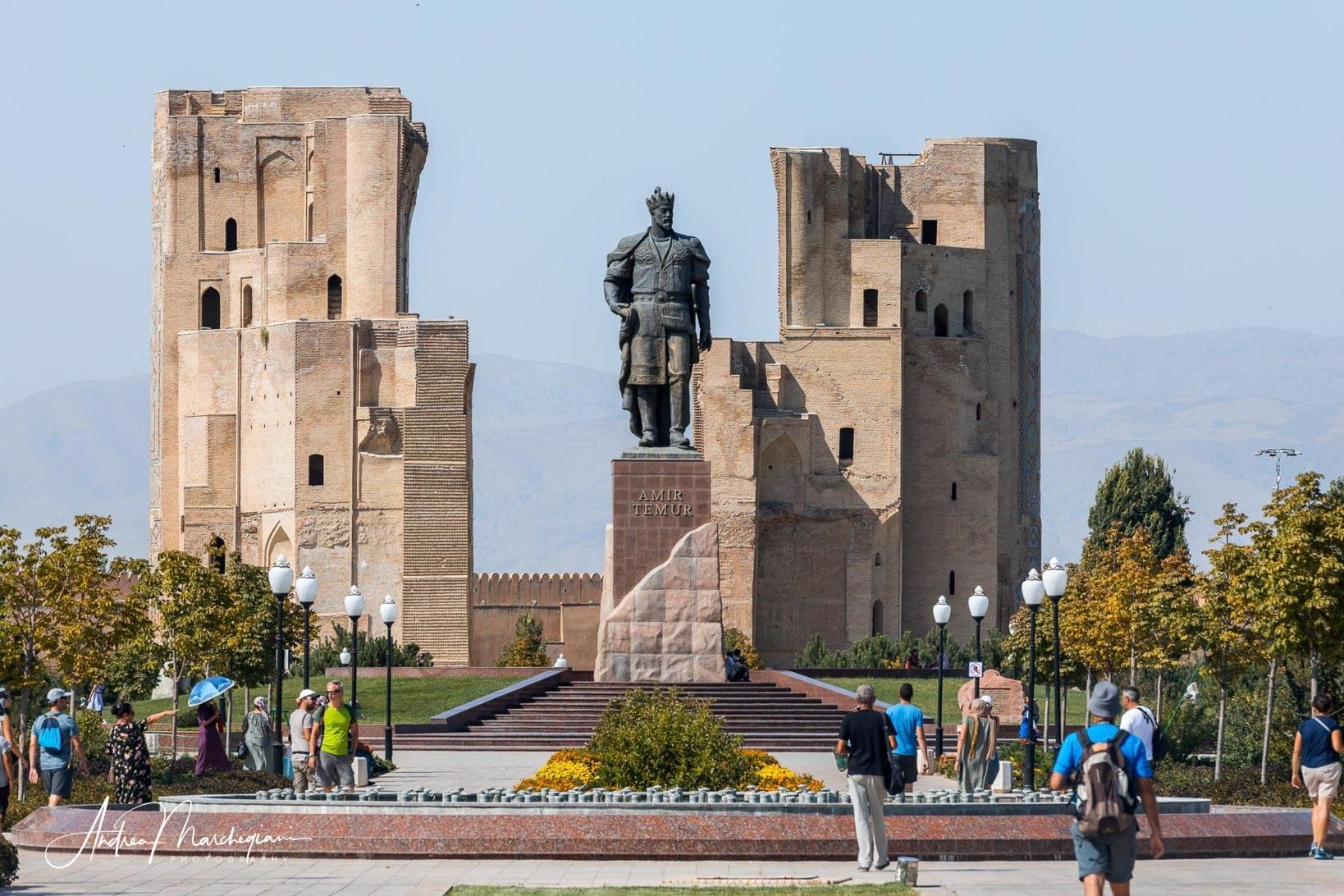
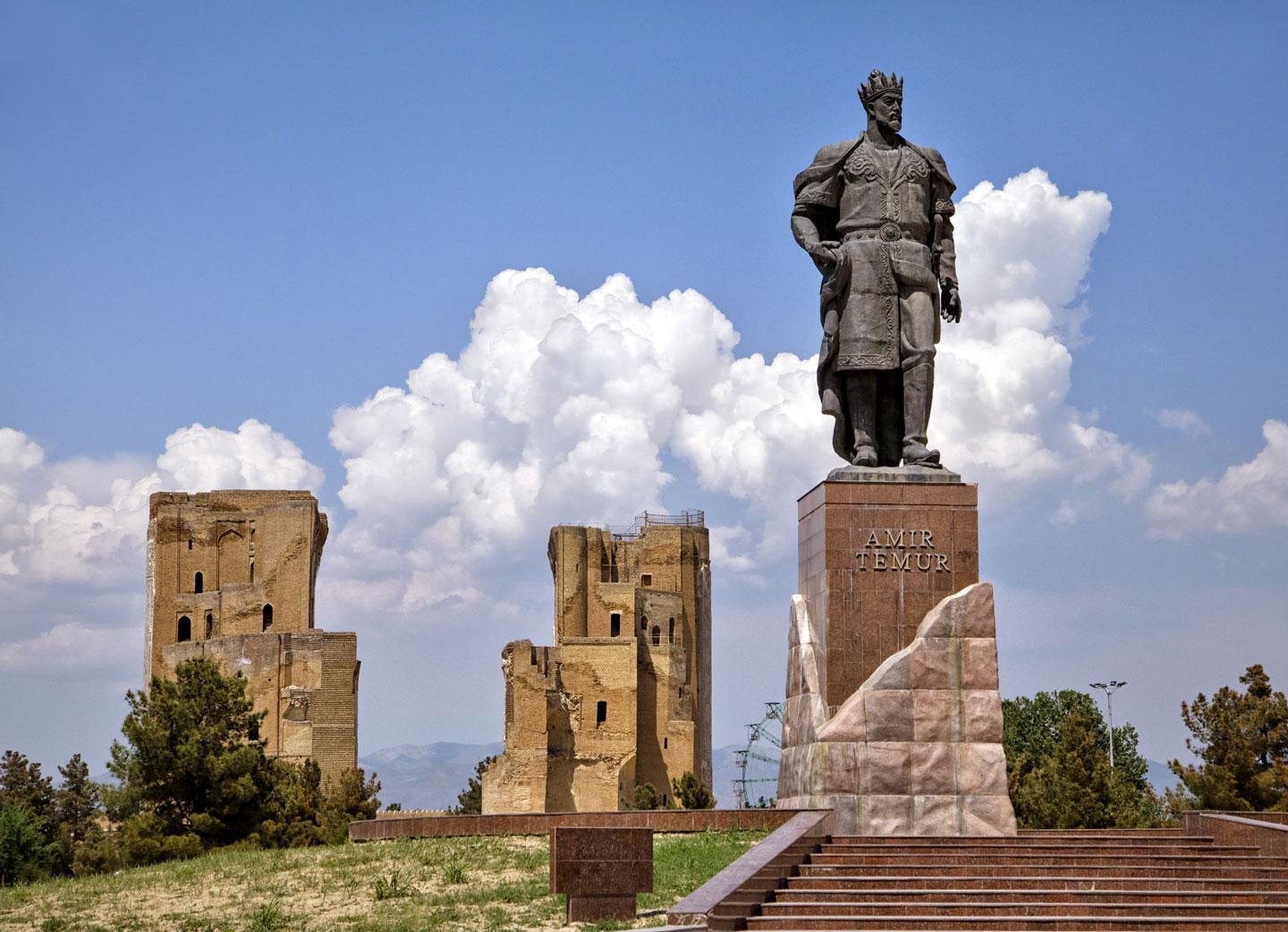
Located in the heart of the city, this statue serves as the central meeting point for almost every shahrisabz tour.
They complement each other, though most visitors who do both find Samarkand offers superior historical density while a shahrisabz tour provides a more tranquil experience. Choosing between these Uzbek landmarks depends on whether you prioritize extensive sightseeing or mountain-framed heritage sites.
| Feature | Top pick Shahrisabz | Samarkand Day Tour |
|---|---|---|
Primary Historical Focus |
Timurid dynasty roots | Silk Road trade hubs |
Travel Distance |
High from Samarkand | Central city access |
Mountain Scenery |
Significant elevation | Flat plains |
Architectural Preservation |
Restoration and ruins | Extensive monumental structures |
Time Commitment |
2–4 hours | Full day |
Entry Fees |
40,000 UZS | Varies by monument |
| See tickets → |
Verdict: Select the shahrisabz tour tickets if you prefer intimate heritage exploration, whereas the Samarkand option serves travelers seeking the primary architectural icons of the region.
Choose your ticket, select your date, and reserve in under two minutes. Secure checkout handled by our verified partner.
Instant confirmation by email, with a mobile voucher you can save offline. No printing, no queuing at a collection desk.
Arrive at the entrance, show your voucher on your phone, and walk in. Most tickets include priority or skip-the-line access.
Practical details for your visit straight from our verified partners — hours, access, rules, and how to get there.
Shahrisabz city center
Look for the statue of Amir Timur
Direct travel from Samarkand is the most reliable method for a shahrisabz tour.
Private hire allows for scenic stops at the mountain passes.
Modest clothing covering shoulders and knees is recommended when visiting religious heritage sites during your shahrisabz tour.
Small daypacks are permitted, but large luggage is not allowed inside the historical monuments. Security checkpoints may conduct bag inspections during high-traffic periods.
Photography is permitted in outdoor areas and most courtyards, though flash may be prohibited inside small mausoleums.
The ancient site features uneven terrain and original stone flooring, which may be challenging for wheelchair users. Some areas of the Shahrisabz heritage site are restricted to pedestrian access.
Mobile phones are permitted for personal use. Keep devices on silent mode when entering areas where local pilgrims may be present.
The open courtyard spaces provide ample room for families, though strollers are difficult to maneuver on uneven historic ground. Bringing water and sun protection is advised for a family-friendly shahrisabz tour.
There are no dining facilities within the protected monument grounds. Visitors should carry sufficient water, especially during the warmer early autumn months.
Pets are not allowed within the monument grounds. Only service animals with proper documentation are permitted.
As a UNESCO World Heritage site, preservation efforts are ongoing. Please remain on designated pathways during your shahrisabz tour.
Best time to go, insider tips, nearby landmarks, and the cancellation fine print — flip through to skim what matters to you.
How crowds, weather, and events shift across the year.
Mild temperatures and blooming flowers ideal for a walking shahrisabz tour.
Cooler air and golden light provide excellent conditions for architectural photography.
High temperatures reach peak; early morning arrival is strictly recommended.
Quiet atmosphere with potential snow, though some structures may be cold.
Small details that turn a good visit into a great one.
Temperatures can fluctuate significantly between morning and afternoon hours.
The arid climate requires regular water intake throughout your shahrisabz tour.
Hiring a local expert provides historical context on Timurid architecture.
Beating the afternoon heat makes for a much more enjoyable experience.
Non-bookable sights within a short walk — free to visit, easy to pair.
A massive bronze monument honoring the founder of the Timurid Empire.
A historic trading dome offering local crafts and textiles.
Flexible, no hidden fees.
Full refunds are available for any shahrisabz tour cancellations made 48 hours prior to the scheduled start. Cancellations within this window may forfeit the entrance fee of 40,000 UZS.
Hand-picked options within walking distance — pick a district for vibe, or a specific hotel for convenience.
Comfortable lodging near the main sites.
The 38-metre-high entry portal of Ak-Saray Palace still rises from the Shahrisabz plain, though Amir Temur's craftsmen completed it in 1404 and earthquakes brought down the rest within three centuries. The inscription across its blue-tiled arch read "If you doubt our power, look at our buildings." What survives is a fraction of the original structure, yet the scale of the doorway alone confirms the ambition of the Timurid court. Shahrisabz sits 90 kilometres south of Samarkand, across the Takhta-Karacha Pass at 1,675 metres. The city carries UNESCO World Heritage status for its cluster of monuments tied to Amir Temur, who was born here in 1336. The Dor-ut Tilovat complex contains the crypt where two of Temur's sons are buried beneath a ribbed dome finished in turquoise and cobalt tile. Nearby, the Kok-Gumbaz Mosque—commissioned by Ulugh Beg in 1435—features a 46-metre azure dome and a carved marble mihrab. The Dor-us Siadat ensemble holds the remains of what was intended as Temur's own mausoleum, though he was ultimately interred in Samarkand's Gur-e-Amir instead. Day tours from Samarkand typically depart at 08:00 to allow morning light across the ruins and return by late afternoon. The drive crosses high steppe and offers views of the Zeravshan Range before descending into the Kashkadarya valley. Guides cover the palace's original layout, the role of Shahrisabz in the Timurid empire, and the restoration work carried out since the site's UNESCO inscription in 2000. Tours include entry to Ak-Saray, Dor-ut Tilovat, and Kok-Gumbaz; some add a stop at the central bazaar or the Chorsu trading dome. The combination of mountain scenery and architectural remnants makes a Shahrisabz tour a counterpoint to Samarkand's more famous Registan ensemble. Where Samarkand showcases the Timurid capital at its zenith, Shahrisabz reveals the dynasty's origin and the engineering ambition that preceded it. The ruins are less restored, the site quieter, and the narrative more personal—this was Temur's home city, and the monuments reflect both his rise and the empire's eventual contraction.
"If you doubt our power, look at our buildings."
A step-by-step walkthrough of the visit — what you'll see, how long each stage takes, and the details that matter.
You leave Samarkand before 08:00, heading south on the M39 highway as the city's blue domes recede behind you. The road climbs steadily, passing terraced orchards and Soviet-era rest stops before entering the Takhta-Karacha Pass. At 1,675 metres the air is thinner, the views open across folded ridges, and you stop for photographs where the descent into the Kashkadarya valley begins. An hour later you reach Shahrisabz and walk through the gates of Ak-Saray Palace. The twin pylons of the entry portal frame the sky; your guide points out the remnants of mosaic work—lapis lazuli blue, turquoise, white calligraphy—still visible in the upper sections. You move to Dor-ut Tilovat, stepping into the cool interior where Temur's sons rest beneath a ribbed dome. Light filters through grilled windows, and the tile work shifts from cobalt to turquoise as you circle the crypt. At Kok-Gumbaz Mosque you pause in the courtyard, looking up at the 46-metre dome. The marble mihrab inside is carved with geometric patterns, and your guide explains Ulugh Beg's role in its construction. By midday you've walked the perimeter of Dor-us Siadat, photographed the fragmentary walls, and returned to the vehicle. The drive back to Samarkand takes three hours, retracing the pass in afternoon light.
The site is open daily from 08:00–18:00 for your visit.
Entrance is 40,000 UZS per site for foreign adult visitors.
The site has some uneven terrain but is generally navigable for those on a shahrisabz tour.
Yes, photography is allowed, though please be respectful of the historical structures.
Wear modest clothing that covers your shoulders and knees.
No, there are no restaurants inside, so bring snacks for your shahrisabz tour.
The best arrival window is 08:00–11:00 to avoid the peak heat and for better photography.
Yes, limited public parking is available near the main entrance.
Yes, children are welcome on a shahrisabz tour, though strollers are not recommended due to uneven stone.